
Binding 101
**This document was written with the help of a doctor in the field of trans healthcare. That said, it is meant to provide guidance only, and should not replace medical advice. TL:DR
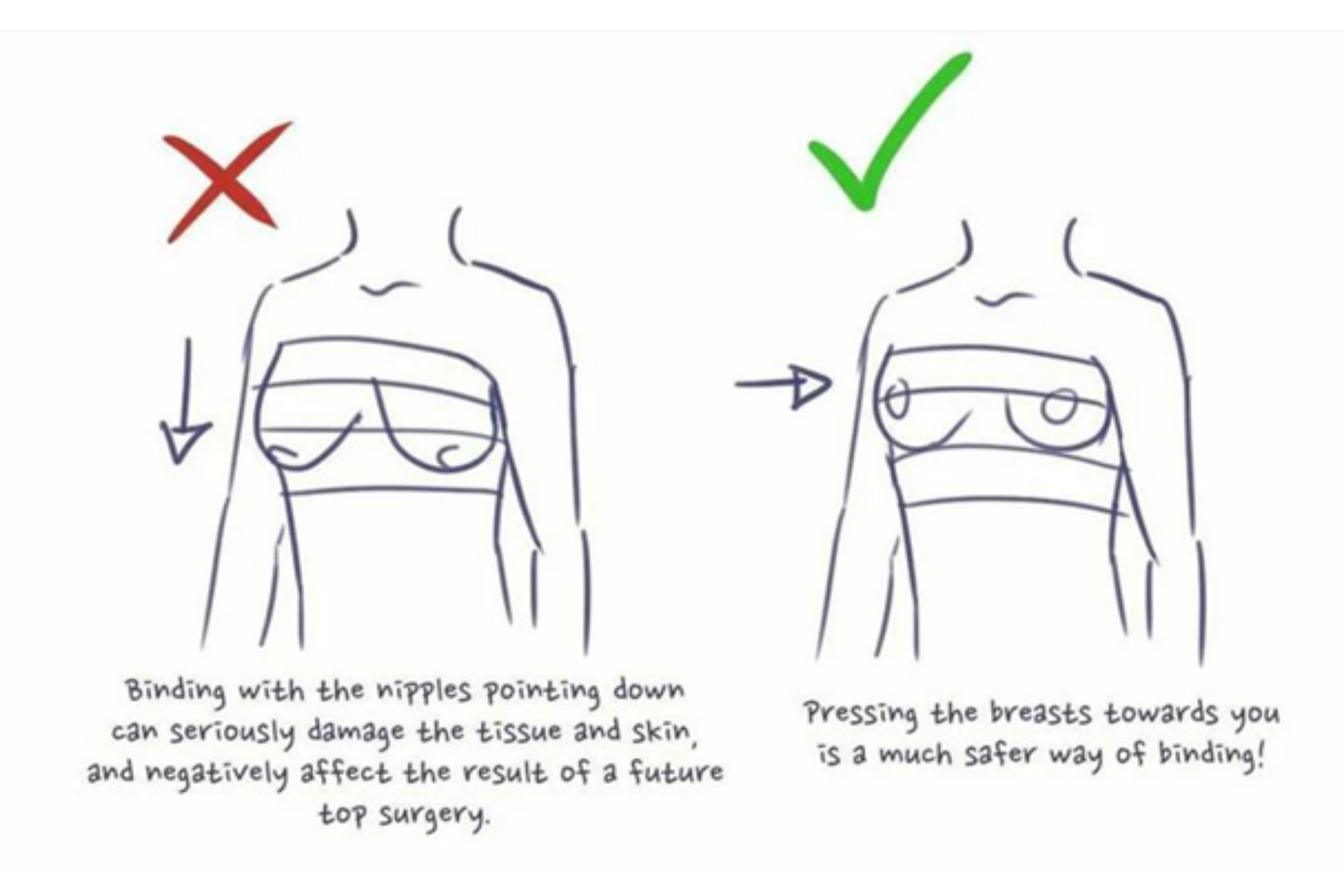
Correct Position – bind straight back toward the body along plane of growth, never downwards
Sensation / Comfort – you should have full range of movement, NO pain, no shortness of breath or numbness
Materials – soft, stretchy, breathable materials are key
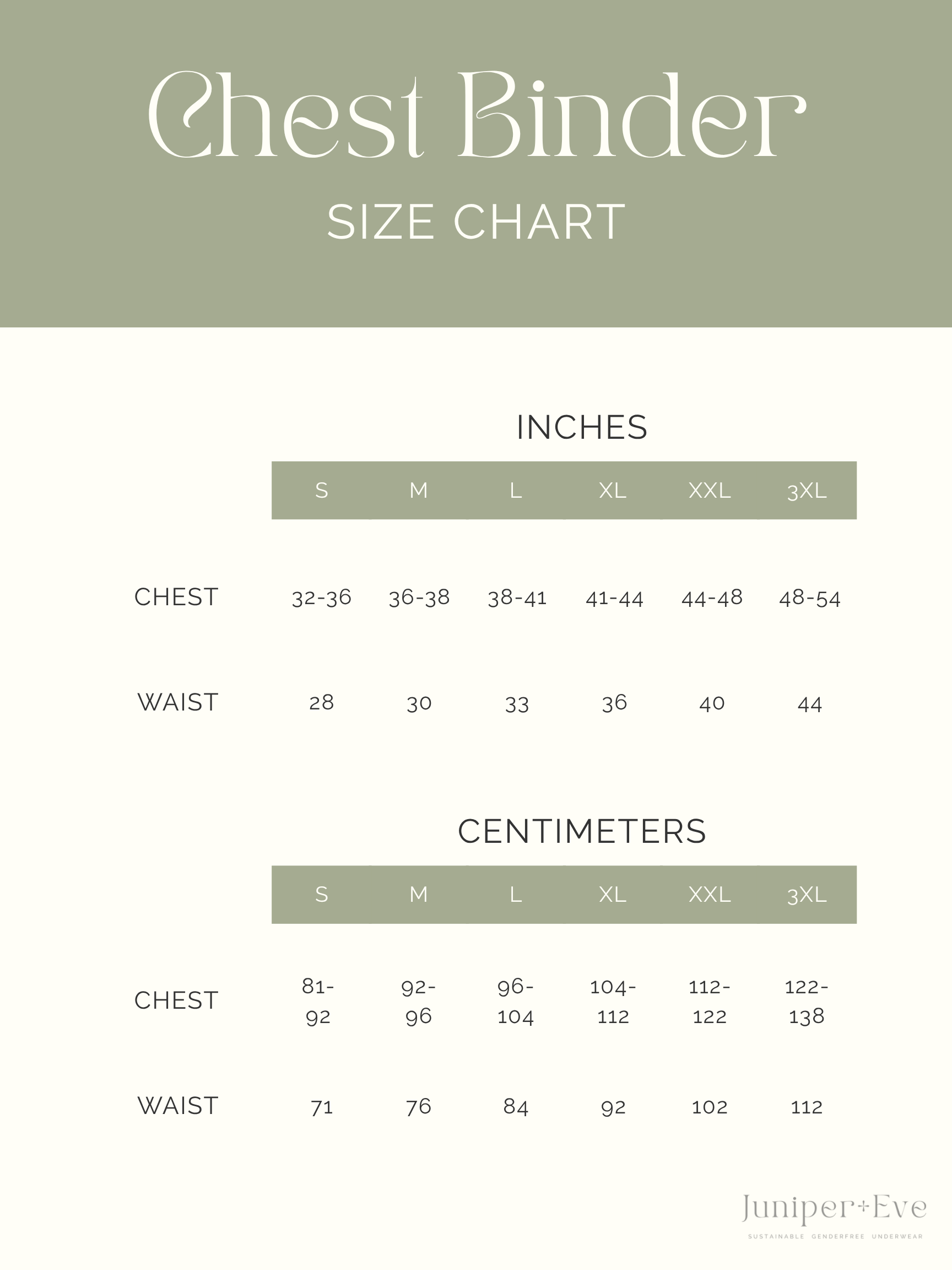
Sizing – follow sizing guides provided by binder companies. Wearing a too-small binder can cause significant injury and won’t necessarily give you a flatter appearance
Duration / Hygiene – do not bind for more that 8-12 hours, do not bind during sleep, wash and dry binder regularly, change when damp
Aftercare – stretch arms, shoulders, chest and back. Deep breathing and coughing can help clear any fluid buildup in the lungs.
Purpose of Chest Binding
Chest binders flatten breast tissue and reduce the appearance of breasts. This can promote feelings of gender euphoria, and help alleviate dysphoria!
Anyone can wear a chest binder. If you want to bind, you can!
How to Put on a Chest Binder
Take your time when putting on and removing your binder – this garment is tight and takes a little practice to get into.
If you are new to binding, try it for shorter periods at first until you get used to the sensation.
Relax. Breathe. Take it slow. You got this!
Get the binder on over your head and put your arms through the armholes.
Lean forward. With one hand, push one breast straight back toward your body, and with the other hand, pull the binder down over that breast.
Switch sides and repeat.
Stand back up straight and pull the binder down the rest of the way. Have a little wiggle, get comfy, adjust as needed. And that’s it!
Safe Binding Practices
Compress the breasts along plane of growth – that is, straight back towards the body, not down. There are many risks associated with binding downwards (outlined below), and you won’t necessarily get a flatter appearance.
Wear a binder for a maximum of 8-12 hours, fewer in warm climates or if you are sweating a lot. You should be able to take a full deep breath while wearing your binder.
Binding can cause muscle soreness, aches and stiffness, sometimes in unexpected places like the neck, back and shoulders. A mild amount of discomfort is normal – it means you need to take a break and stretch. Listen to your body.
You should not experience sharp pain or difficulty breathing – if you do, take the binder off immediately.
Possible Side Effects of Binding Downward
Soft Tissue - Binding downward puts pressure on soft tissue, increasing likelihood of pain, localized bruising, or even fat necrosis where fatty tissue breaks down due to insufficient blood flow
Sagging - Downward pressure can cause increased skin laxity, meaning more sagging in the breasts due to reduced skin elasticity (ptosis), which can be permanent. It can also impact the results of top surgery or you might require larger incisions.
Skin Considerations – binding downward increases skin-to-skin contact in the creases below breasts and traps moisture. This can lead to rashes, skin infections or sores. Rule of thumb – if your binder is damp, remove it, dry off and then put on a clean, dry binder.
Muscular Risks
Binding restricts movement of several muscle groups, including pectorals, deltoids, trapezius, sternocleidomastoid and serratus anterior. This can cause stiffness, soreness, strain or even bruising in the upper back, neck, shoulders, ribs and chest. Discomfort, stiffness or pain in these areas may be a sign that your binder is the wrong size, or that you need to take a break. Stretching the arms, back, shoulders and neck after binding can help alleviate these symptoms.
Materials
Stretchy, soft materials are best for binding. Material should be breathable to allow for moisture wicking and help with temperature regulation. Don’t use elastic bandages (tensor bandages), plastic wrap or tape that is not intended for skin.
Sizing
Always follow the sizing guidelines provided by the binder manufacturer. While it may be tempting to size down, wearing a binder that is too small can cause serious injury and won’t necessarily give you a flatter appearance. Flatness is determined by multiple factors, including breast size, amount and density of breast tissue.
Red Flags
Common binding side effects include back pain, chest pain, soreness, difficulty breathing, numbness, tingling, overheating, dehydration, skin rashes, and irritation. Consult your doctor if you experience these symptoms, or if they persist after removing your binder.
Binder Alternatives
Chest binders can be expensive and difficult to access for some. But don’t worry, there are other options!
Note: Never use elastic bandages (tensor bandages) for binding! As you move throughout your day, the bandages can slip down, effectively becoming tighter, which can cause injury.
Sports bras are a great option that are widely available. Some people even double up, wearing two sports bras on top of each other. Look for breathable or moisture wicking materials – avoid polyester. Be careful not to use bras that are too tight. The same rules apply as with binders - you should have full range of motion, no shortness of breath and no pain. Don’t double up for more than 8-12 hours. Take breaks. And make sure to change and wash sports bras regularly to keep your skin clean and dry.
Skin-Safe Tape is another option. Look for ‘trans tape’ or ‘binding tape’. Follow manufacturer instructions for safe use.
Styling is an option for concealing the appearance of breasts, or for when you need to take a break from binding (eg. if you have a long workday and need to take breaks periodically). Oversized tshirts, sweaters and hoodies (especially ones with tummy pockets) can distract the eye from the chest and help alter proportions. Shirts or button-ups with busy prints or in dark colours can also help redirect the eye. For curvier folks, a shirt cropped just above hip length (so it doesn’t bunch up and sit on your hips) can help hide curves. Play with silhouette, try things out and find what works for you!
A Note on Our Binders
Our binders are designed to squish your body into a shape that is different from your natural, unbound shape.
They do this by being smaller than you - a.k.a. your binder is going to feel very tight at first. Don’t panic! Our sizing guide takes this into consideration.
Minor discomfort is normal. Pain or difficulty breathing is not. If you experience these symptoms, remove the binder immediately. You may have the wrong size.
Don’t downsize. Too-tight binders will only put your health and safety at risk and won’t necessarily give you a flatter appearance.
It can take time to get used to a new binder. Be patient with yourself, go slow and listen to your body. You got this!
Happy Binding!